
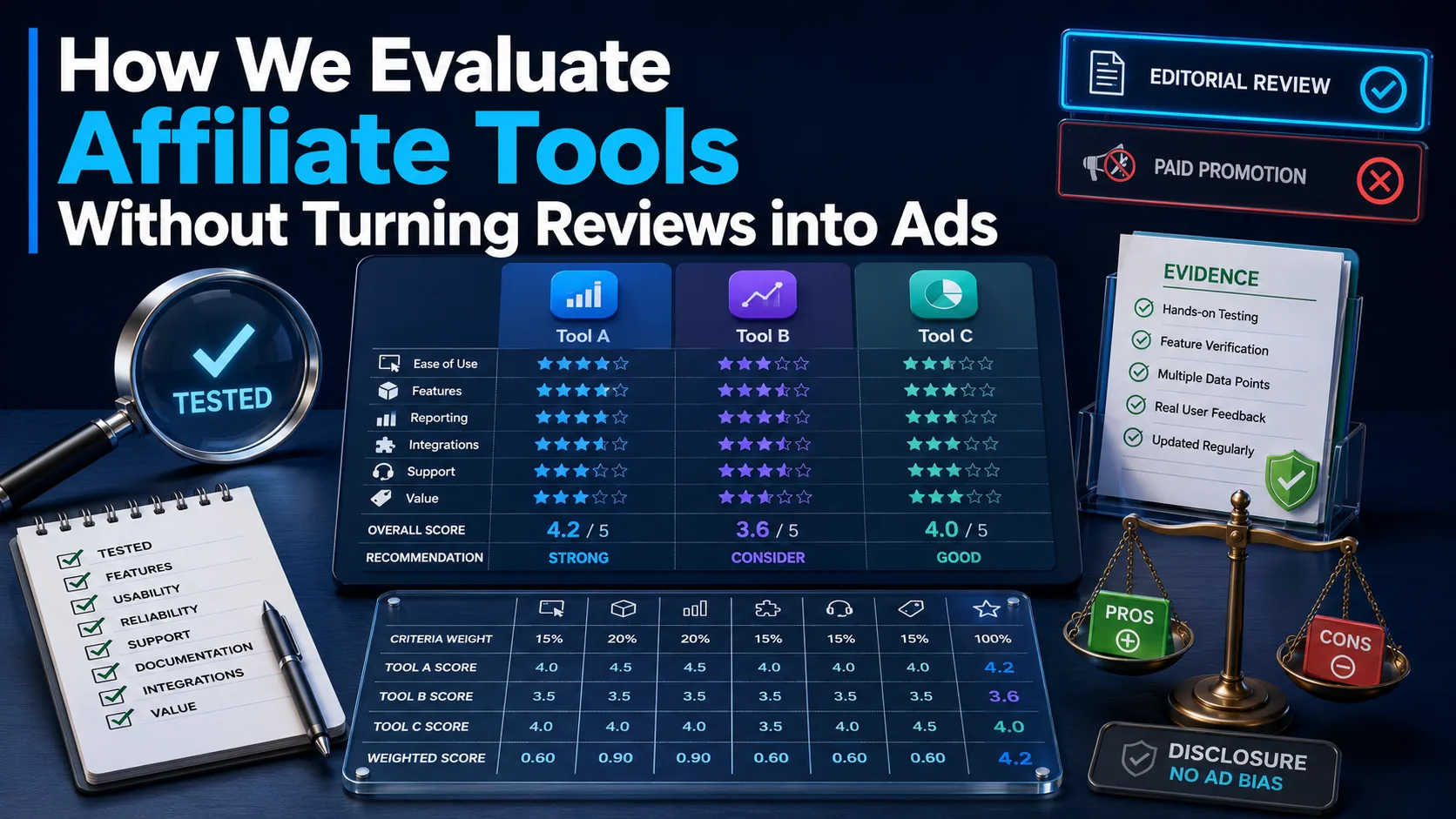
A transparent, behind-the-scenes look at our rigorous testing methodology, how we handle affiliate links, and our unwavering commitment to honest, unbiased tech reviews.
The Affiliate Dilemma: Balancing Trust and Revenue in Tech Blogging
The modern internet faces a massive trust deficit when it comes to software and tech tool reviews. Users searching for genuine solutions to their workflow bottlenecks are routinely met with thinly veiled advertisements disguised as objective editorial roundups, where the primary goal is to drive clicks to affiliate links rather than solve user problems.
At Fikra in Action, we believe that reader trust is our most valuable asset—one that cannot be bought, sold, or traded for short-term financial gains. While the affiliate marketing model is a legitimate way to fund independent tech journalism, the problem lies in how it is managed. Allowing financial incentives to dictate editorial direction is a recipe for losing audience trust.
To combat this, we have established a clear, transparent review framework. This guide outlines the exact principles and practical steps we take to ensure our reviews remain accurate, deeply critical, and focused entirely on the needs of our readers.
Our Hands-On Testing Protocol: Real-World Scenarios Only
We never write reviews based on marketing copy, press releases, or a quick glance at a product's landing page. Our evaluation process begins with setting up a dedicated testing environment where we install the software and integrate it into our actual daily operations for a minimum of two to four weeks.
This extended testing window is crucial because many software flaws—such as memory leaks, API rate limits, slow database queries, or poor customer support response times—only surface after prolonged, heavy usage. We push these tools to their limits to see how they handle real-world stress.
Every step of our testing is documented with raw screenshots and performance metrics. We compare the tool directly against its primary competitors in terms of speed, user experience, feature richness, and pricing fairness, ensuring our final verdict is backed by hard data rather than subjective impressions.
The Editorial Firewall: Separation of Content and Commerce
To eliminate cognitive bias, we maintain a strict firewall between our editorial team and our business development operations. Our writers and testers do not know which tools have active affiliate partnerships or offer higher commission rates during the evaluation phase.
We choose which tools to review based on reader demand, search trends, and genuine utility, not on which company offers the most lucrative affiliate program. If a highly requested tool fails our testing protocol or fails to deliver real value, we will not recommend it, regardless of the potential commission.
Affiliate links are only integrated during the final publishing stage by our production team, long after the editorial score and review text have been locked. We clearly disclose these links at the top of every article, ensuring our readers know exactly how we support our work.
Why We Highlight the Bad and the Ugly
A review without negative feedback is not a review; it is a sales pitch. No software tool is perfect. Every application has trade-offs, whether it is a steep learning curve, lack of offline support, or a pricing structure that penalizes growing teams.
We intentionally dedicate significant sections of our reviews to exploring limitations, bugs, and missing features. We discuss workarounds we had to implement and identify specific user groups for whom the tool would be a poor fit.
By highlighting these flaws, we empower you to make informed purchasing decisions. Knowing what a tool cannot do is often far more valuable than knowing what it can do, saving you from wasting time and money on software that does not align with your workflow.
How to Spot Biased Reviews Elsewhere: A Reader's Survival Guide
As a tech-savvy reader, you can develop a keen eye for spotting biased reviews on other platforms. The most obvious red flag is overly enthusiastic, adjective-heavy writing that lacks any critical analysis or fails to mention a single product limitation.
Be skeptical of websites that award perfect scores to every product they review, or those that avoid direct head-to-head comparisons with obvious competitors. Honest reviewers will always suggest cheaper or open-source alternatives and clearly define who the product is not for.
Finally, look for original media. If a review only features polished, official marketing graphics instead of actual, unedited screenshots of the software in action, it is highly likely the reviewer never actually used the product and is simply recycling promotional material for quick affiliate conversions.
Comparison table
Evaluation Metric | Honest & Independent Review | Biased / Sponsored Review |
|---|---|---|
Testing Methodology | Weeks of hands-on, real-world testing in production environments | Regurgitating official spec sheets and marketing copy |
Flaws & Limitations | Clearly documented with workarounds and target audience exclusions | Ignored entirely or minimized as minor, insignificant details |
Affiliate Disclosure | Prominently and transparently disclosed at the top of the page | Hidden in fine print or completely undisclosed to the reader |
Primary Goal | To help the reader find the absolute best tool for their specific needs | To maximize click-through rates and affiliate conversions |
Frequently asked questions
Do you accept payment to write positive reviews?
No, we never accept paid sponsorships, free gifts, or financial compensation in exchange for positive reviews or inflated ratings. All our opinions are entirely our own and based on hands-on testing.
How do affiliate links work on your site?
When we recommend a tool we genuinely like, we may include an affiliate link. If you click that link and purchase the tool, we earn a small commission from the vendor at no extra cost to you. This helps fund our independent testing process.
What happens if a recommended tool changes for the worse?
We regularly monitor and update our past reviews. If a tool we previously recommended decreases in quality, raises its prices unfairly, or suffers from poor maintenance, we will update our review to reflect these changes and withdraw our recommendation if necessary.
Comments
Be the first to comment.